
Today we’re going to do squash.
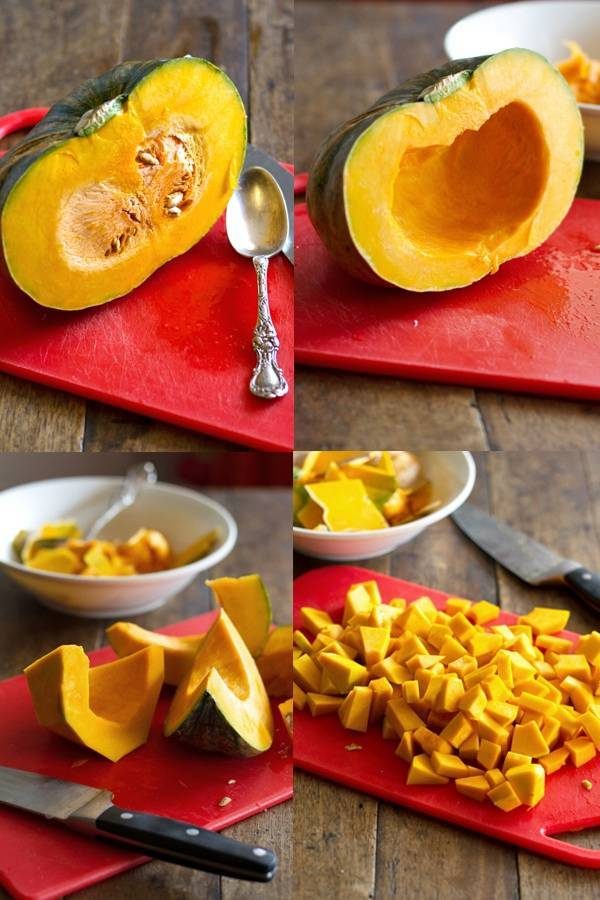
Take it from its large, awkward natural state to a nice ready-to-cook state.
This is not revolutionary, I know. But that’s ok because I’ve never really claimed to be a food revolutionary. More like I’m always late to the food trend game and I like taking the easy way out when it comes to food prep.
So this post is for those of you who are like me and typically avoid things like peeling and cutting your own squash. Also, this is a head start for those of you who want to be ready for tomorrow’s homemade squash curry sauce. Helloooo.
Guess what? In the last 6 months, I’ve become regular squash peeler. Like, weekly. I actually keep a little plastic container of cut-up squash in our fridge just for moments like these.
How To Cut and Peel a Kabocha Squash
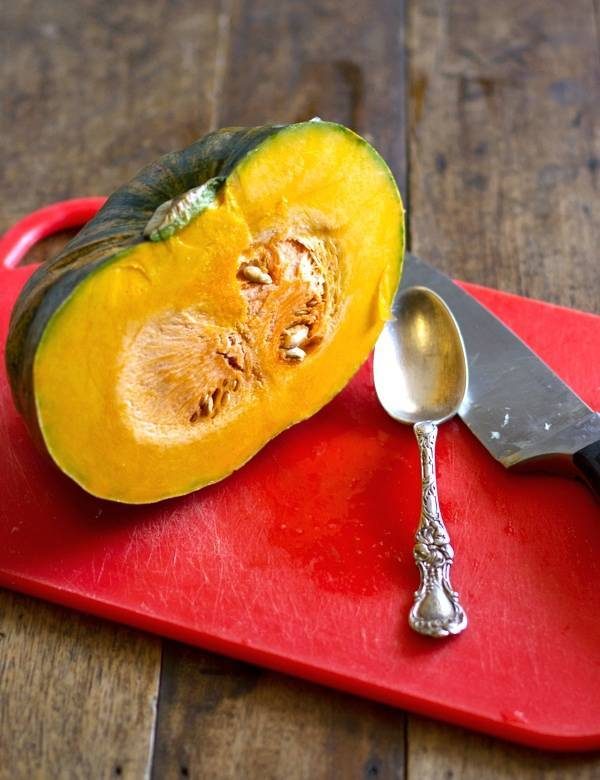
I cut it in half with a huge knife. These suckers can be big. But I just stick the knife in the middle and work around the outside until I get that big guy into two parts.
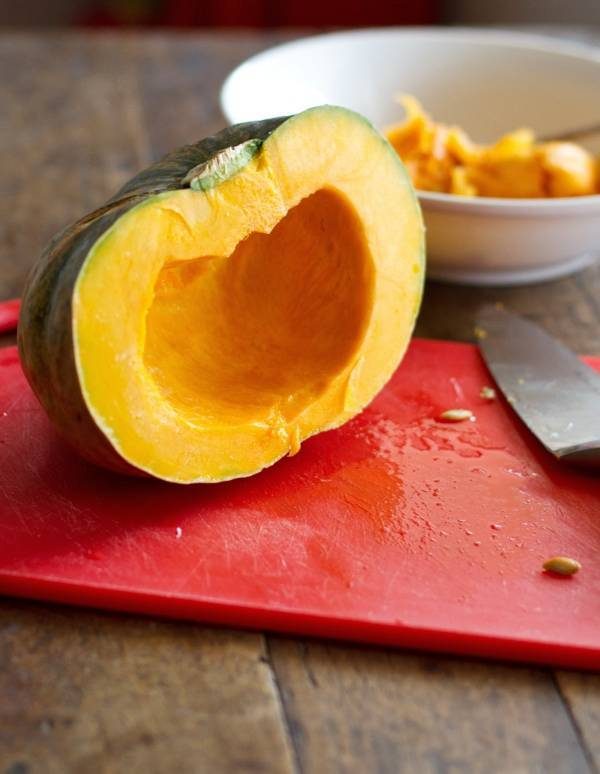
Then I scoop out the goop and seeds. Is there a more technical word than goop? Just get rid of it.
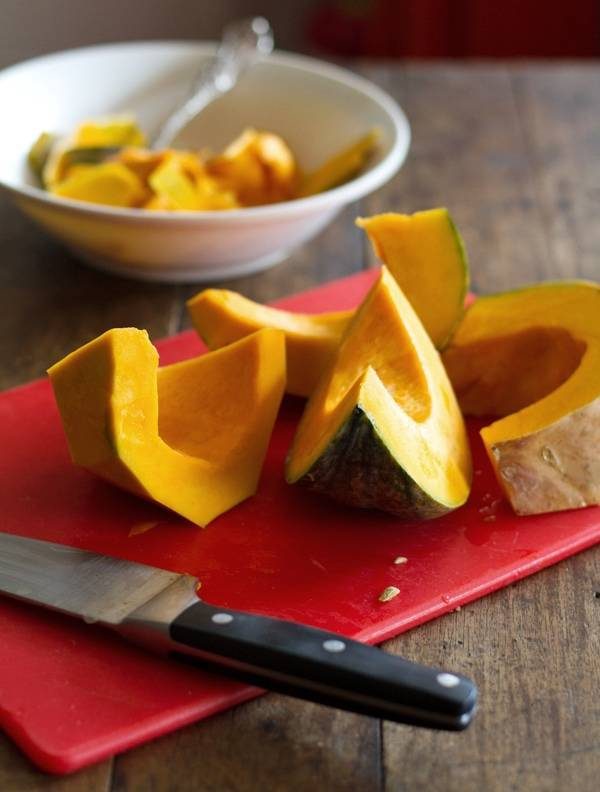
Then I cut the halves into 4-5 wedges. I take each piece, lay it on its flat side, and cut the peel off. Usually I have to do this in a few pieces – it doesn’t all come off in one piece.
Then I dice, cut, chop, whatever you wanna call it.
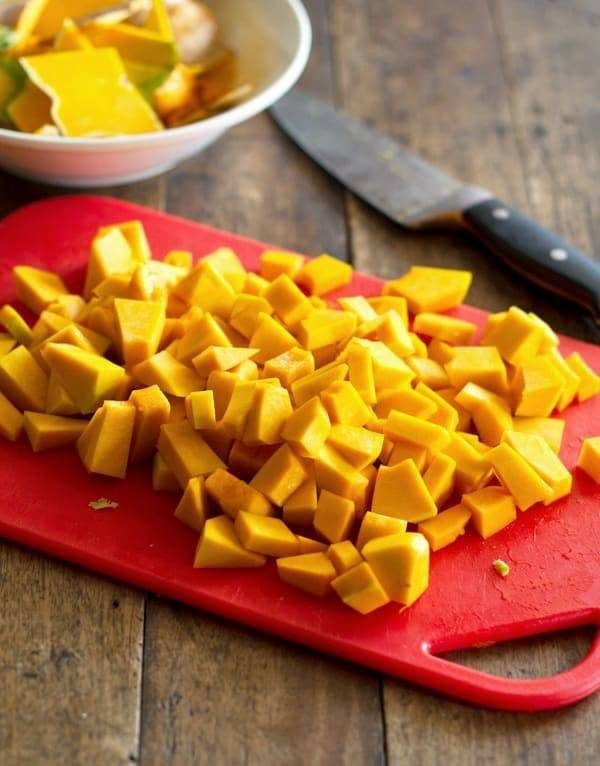
The sky’s the limit here. Stir frying. Roasting. Souping. Salading. And my favorite, making creamy sauces.
Go love yourself some squash.



I just tried your method for cutting and peeling kabocha squash, and it made such a difference! The tips about using a sharp knife and microwaving it first really helped. Can’t wait to try the recipes you shared in the post! Thank you!
Thank you for this helpful guide! I’ve always struggled with cutting kabocha squash, but your tips made it look so easy. I can’t wait to try this in my next recipe!
This post made cutting and peeling kabocha squash so much easier! I never knew using a sharp knife and microwaving it for a minute could make such a difference. Can’t wait to try this in my next recipe. Thanks for sharing these tips!
Good information and direction .
Thanks
Hi Lindsay..I stumbled upon your website as I was searching for a simple squash soup. Your recipe is really simple and more so that I didn’t have to use broth. I did it tonight and definitely will be filed in my recipe book. Also I glanced upon the word Philippines and of course attracted me because I live here in Manila. And your recipe led me to a link of where you had an opportunity to work. And next week I am going to Cebu to celebrate the 90th birthday of an aunt…so there you go…indeed a small world…what most importantly…yes I too am a Christian worker!
Thank you Lindsey for the instructions to peel the kobocha squash…I was scared of it – ha! Your info was perfect. Cheers!
Happy to help, Krista!
Thanks for taking some time and posting this great article. My mother has cooked this squash but I never asked her how to cut it. I will try it today. Keep writing and sharing such great ideas.
Surprisingly the peel cooks up soft and very tasty. Try it in soups or steamed. So much easier to not peel.
Picked up a really pretty squash at the end-of-season sale at the produce market. Thought I could easily find the type and how to use on the internet – it might be a Carnival squash. Do you know of a really good site that helps identify the numerous and various kinds of squash? I will probably roast these but your recipes are divine!
This site might be helpful, Ginni: https://www.realsimple.com/food-recipes/shopping-storing/food/common-types-winter-squash.
I was looking for wild rice recipes and found your Harvest Wild Rice Skillet, which looks yummy! I checked the link for cutting squash and found this post. Because I’m not able to exert a lot of force when cutting things any more, I’ve learned alternative methods you might find helpful.
Since I’m not a regular on your site, I don’t know how you feel about microwaves, but the easiest method is to poke a few holes in the whole squash, then pop it into the microwave until it has softened a bit (time depends on size of squash), then let it sit until cool enough to handle, cut, scoop out seeds, peel, and go on with your recipe.
Alternately, I pop the whole squash into a large pot of water, bring to a boil, and either boil for 5-15 minutes (depending on size of squash) until slightly softened OR once it reaches the boiling point, cover, turn off heat, and let sit in hot water for 30-90 minutes (depending on size of squash) until slightly softened. Let sit until cool enough to handle, cut, scoop out seeds, peel, and go on with recipe.
Regardless of the method, I don’t cook the squash all the way through, just enough to make it much easier to peel and cut up.
Note: This may also cut the cooking time for whatever recipe you’re making since the squash will be partially cooked.
Thanks for the great tips Ruth!
Thank you so much for this! My mom has cooked this squash forever but never showed me how to cut it (well, I never asked). I’m cooking this tonight for baby food tomorrow!
Thank you so much! Very simple and straight forward instructions! Really saved me a whole lot of time. Very grateful for the beautiful pictures and instructions 🙂
This article was not helpful at all. It should mention peeling is not necessary. After working up a sweat trying to “peel” the squash I looked beyond this article and found better advice. Maybe mention early in this article that peeling isn’t necessary.
Sorry Candice! My intent was showing how to do it when the peeling is necessary, as it is in some recipes.
I never peel kabocha squash – the peel is much lighter than other squash and very edible – try it!
Whenever I write about squash, I feel like I keep repeating the word ‘flesh’ and it grosses me out after a while. There must be a better way!
great tips!