

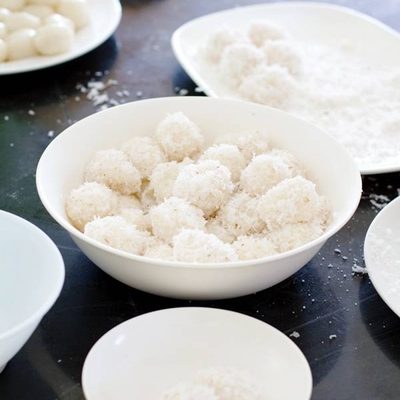
My friends, this little white ball is on its way to becoming Palitaw.
Palitaw is the weirdest and most addicting little snack that I’ve probably ever had. I say that about all of these recipes, don’t I? About the addicting part? But really, this one is. Truly.
Palitaw is actually glutinous rice flour and water mixed into a dough, rolled into balls, boiled until they’re soft and kind of chewy, and rolled in coconut and sugar. And if you’re having a party, you decorate them with colored sugar or food coloring and put ’em on a stick, because food on a stick = party.
This was another recipe that was supposed to be a “lesson” with my students where I’d bring them into the kitchen and they’d learn infinite amounts of math and reading by using a written recipe and halving the fractions. What ensued was more like a lesson for me in 1) how most Filipinos actually cook, which is without a recipe; 2) the wonders of glutinous rice flour; and 3) how to dab the sweat off your forehead with a paper towel in one hand while simultaneously popping another palitaw bite into your mouth with the other.
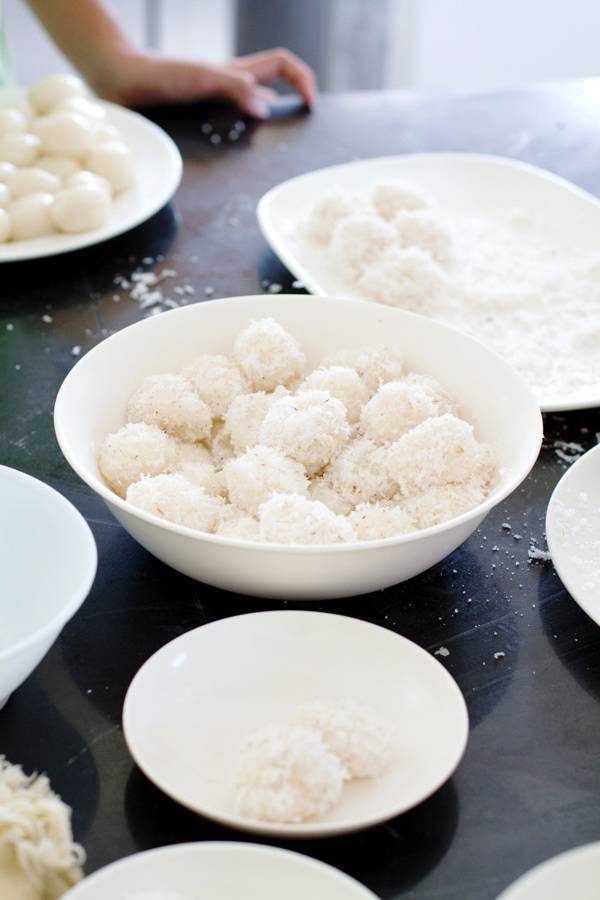
I have this vivid memory of being hotter (as in scorchingly hotter) than humanly possible and trying to help my students make sense of writing this recipe all while sneaking one after another of these little coconut rice flour gooey balls into my mouth. “Yes, students, that’s the correct spelling of Palitaw.” *chomp chomp* “Mmhm, a half cup.” *chomp*
I mean, you’re done making them before you’ve basically even started, so pop. Into the mouth they go. Served warm and soft with FRESH coconut (I mean, literally, there’s a tree right out there and one of the uncles just grabbed a coconut from it) and sugar stuck to the outside? These are the kinds of foods I miss.
Long live Filipino snacks. ♥
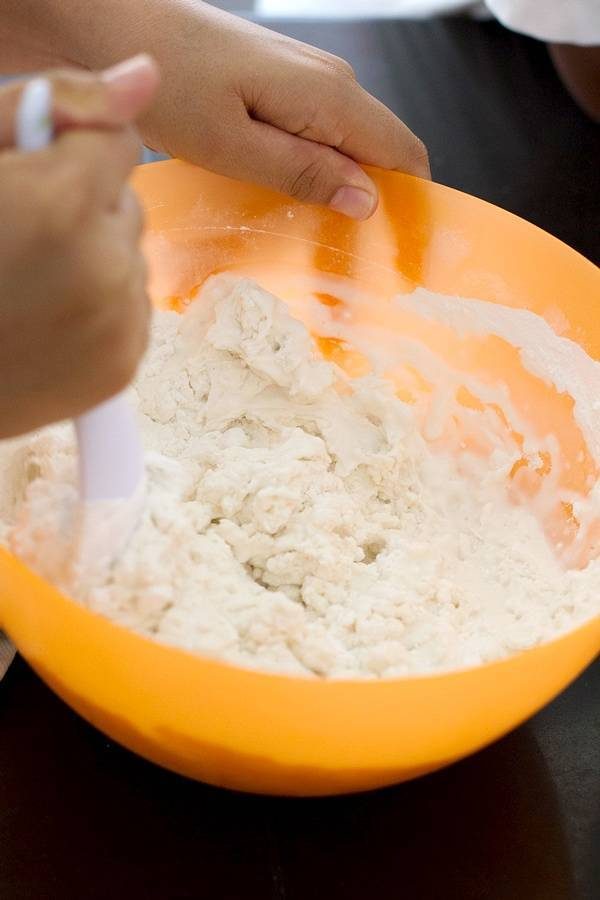
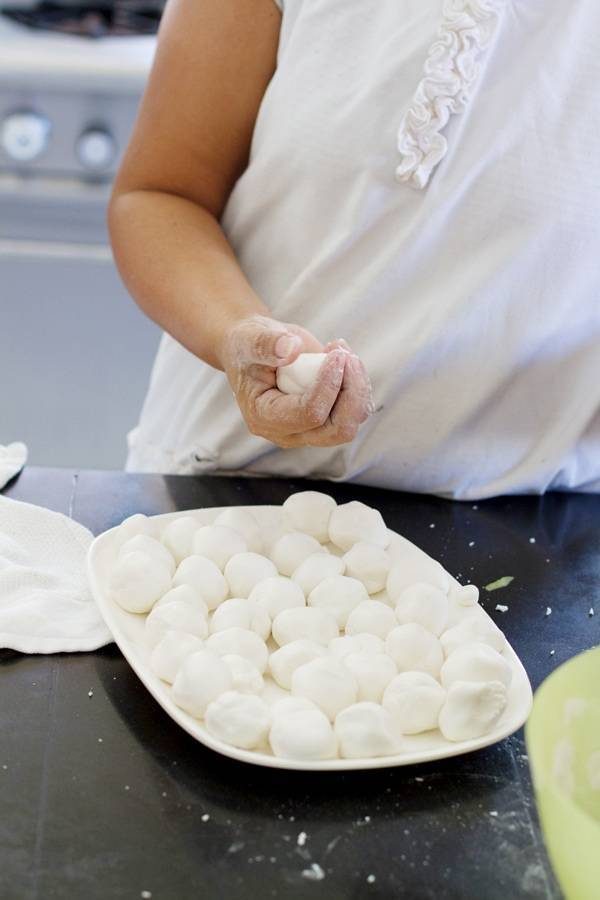
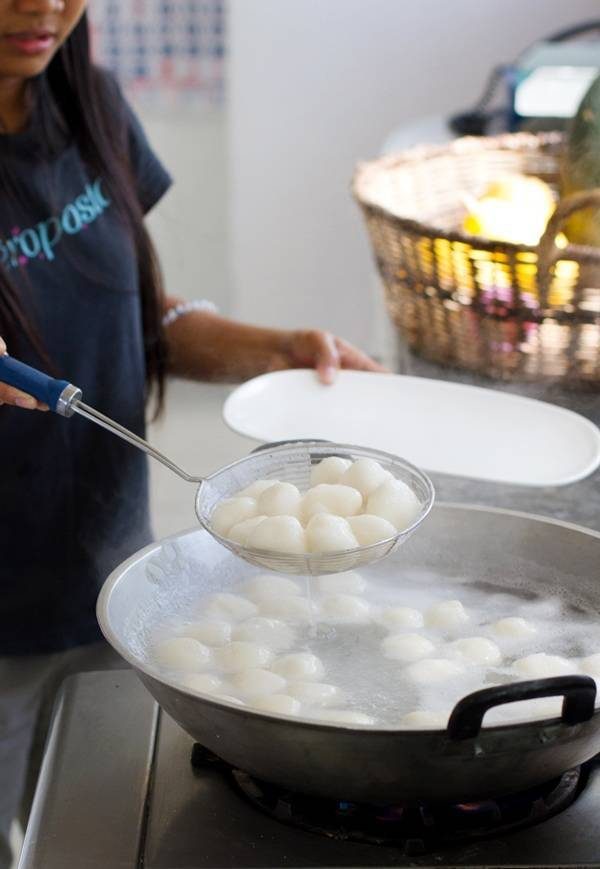
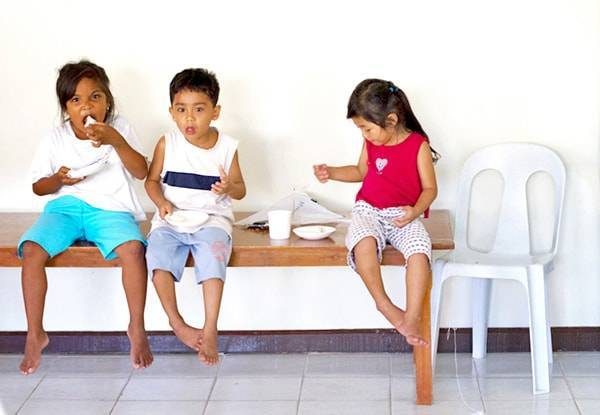
Here’s the rest of the story in pictures.
Palitaw
- Total Time: 20 minutes
- Yield: 20 1x
Description
This is recipe for coconut and sugar coated Filipino palitaw from the orphanage in the Philippines where I lived and worked for a year.
Ingredients
- 4 1/2 cups glutinous rice flour
- 2 cups water
- sugar for dusting
- shredded coconut for dusting
Instructions
- Mix the glutinous rice flour with the water until a thick, sticky mixture forms. Roll into small balls.
- Bring a large pot of water to boil. Add the glutinous rice balls and boil until solid and floating to the top, about 10 minutes. Drain the water and let the palitaw cool slightly.
- When cool enough to handle, roll in a bowl of sugar and coconut. Serve plain or on skewers. In my opinion, these are best while they’re still hot. For a fun twist, try adding food coloring to the dough or topping with colored sugar.
- Prep Time: 10 mins
- Cook Time: 10 mins
- Category: Dessert
- Cuisine: Filipino
Keywords: palitaw, filipino dessert, coconut and sugar




The kids will love them!
i was born in Luzon (northern part of the Philippines) and palitaws are commonly shaped as slightly flattened sphere (not too flat or too thin). It’s nearer to a shape of red-blood cells 😂
when we moved to the central ph (Iloilo coty), they called it “moasi” there. it’s not commonly rolled on fresh coconut but on muscovado sugar.
palitaw/moasi are sold on banana leaves. try it. banana leaf adds up an authentic asian aroma 🥰
The “weirdest” little snack lol. Yes, because calling food from other cultures “weird” isn’t rude at all..
LIKE OH MY GOSH! I LIVED IN THE PHILIPPINES AND THE FOOD IS SO DELISH BUT WEIRD!
Wash your legs, Karen. You did nobody any favors by living at a Filipino orphanage and sharing this recipe. You got a typical white lady attitude towards cultures not yours, but will happily profit off of it.
It is incredibly disrespectful to call this food weird. To position yourself as an expert on food that is not your own and to call it weird, disrespects the culture, the people, and the traditions of the Philippines. Check yourself.
Thanks for your Palitaw Recipe. I’m gonna follow this. God bless!
Hi, thank you for featuring our native snacks or kakanin as we call it back home. My question is where do you get shredded coconut here in the US? I found sweetened flaked coconut in the grocery. Would that work?
Yep, sweetened flakes should work!
I’m Filipino and we do it slightly differently at home. We flatten the balls into discs before putting in the water. Also, we add roasted sesame seeds on the coating 🙂
I love this snack food very much. Growing up in the Central Luzon area, our palitaw version is roll into a ball as well but then flatten into a 1/4 inch thick disc. Once cooked and cool to the touch, we roll it on a bowls of sesame seed heated on a frying pan until brownish, grated coconut and sugar. I’m making this one now but no sesame seed tonight. 🙂
This Palitaw is a popular Filipino dessert that brings back the memories of my childhood, long before the fastfood resto became popular, this is one of the popular afternoon snack that I shared with my brothers.
Hi! I was surprised to have found your website. I was searching for recipe for palitaw and saw your’s was shaped into little balls. I thought it looked so cute and what a great idea. I grew up in the Philippines where palitaw is usually flat round or oblong shape. Yours being a little round bite size is just perfect!! Next time though try toasting some sesame seed, and you can mix that with the sugar. It will taste even better!! Thanks for the idea and appreciating Palitaw!!! :))
I love palitaw! Brings me back to my childhood in Cebu. My question is, would 8th be the same to use dedicated coconut instead of fresh coconut since its not ready available where I’m at right now? Thanks so much!
Hi, Kat! You should be able to use whatever coconut you have available to you. The coconut is only used to roll the palitaw in after it is cooked. Hope that helps!
Oh, my goodness, YES. I was born in the PI (Air Force Kid) and ate like a native for the first few years of my life. It totally set my taste preferences. (rice=yay, potatoes=yuck!) Bibingkang Malagkit is one of my favorite things in the world, and I can already tell that I would absolutely love palitaw. Salamat po!
I was wondering if anyone knows how long these will keep or if there are any good storage methods for these? I’m guessing I could probably pre-make the dough and freeze it off, and then boil as needed.
I probably would make them all at the same time and freeze them. My guess is 3-6 months!
I have been browsing through your blog from the latest post up to.. until I saw this. I didn’t know that this Filipino snack is a hit. It’s nice to see something familiar from all the posts filled with recipes foreign to me.
Btw, all your posts are awesome! 😀
Thank you KC!
I love palitaw. It’s easy to cook. But I didn’t know the Central Philippines’ palitaw was rolled into balls. I only saw a flattened one, roll into balls then flattened it, and we use sesame seeds. Usually a ball of glutinous rice is used for ginataang halo-halo. I wonder if you ever tried that. Not much a of a big fan of it because it’s too sweet for my liking, but taste good.
i was shocked seeing a round palitaw as it is usually widely flattened… but whatever it looks like its just really delicious,,, and the round one we call it “bilo-bilo” w/c means round and it is cooked in coconut milk w/ tapioca pearl (big ones) and it is served hot..
Guinataang bilo-bilo! With pieces of taro, sago, and banana 🙂
This sounds so easy to make & tasty, the hardest part will be finding the rice flour but I think I know a little store that just might have some.
most indian, chinese, thai and organic store sells rice flour/ glutinous rice flour/ rice powder/ sticky white rice flour /mochigomeko/mochiko(different names to help you find it easily)
Lindsay, this is off-topic but I hope you don’t mind answering my question: Have you ever had better fresh, ripe mangoes than the ones you tasted in Cebu?
I want to know because I keep saying we have the best mangoes in the world but I’ve only tried Thai mangoes so although other Filipinos claim the same thing, I wonder if we may be too biased.
Will definitely give this a try. We have an Indian version where we steam this and eat it dipped in sugar. there is another version where it is filled with a jaggery and coconut mixture. They are called Modaks
This looks so intriguing and delicious, must try! And the photo of the little ones eating the palitaw is absolutely adorable!
I am addicted to Mochi which seems similar to this except palitaw seems a million times better since it is rolled in coconut! YUM!
Yes! Love mochi!
Yes, these are truly addicting. When I was a kid, we usually wait for the street vendor to come to our house so we can buy these snacks. I think it’s that sugar and coconut coating that makes you want some more!
FYI, “Palitaw” comes from the root word, “litaw”, which means, “to appear”. Once you put the balls into the boiling water, you wait for them to float and “appear” (litaw) on the surface. That means it’s done cooking! 🙂
Yes! thanks Pepin!
Love the pictures! We have a similar Korean snack – it’s also incredibly addicting!
In Indonesia they put a little piece of palmsugar inside the ball (which melts while boiling, supernice), they call it kelopon 🙂 oh, and they mix the flour with coconutmilk instead of water, I think.